Introduction
What is asthma and how does it affect me? How do I live with this respiratory condition? Read on in this blog post to find out!
What is asthma and how does it affect the airways?
Because asthma attacks are primarily triggered or set off from external factors outside my control, it is from my experience that attacks feel as if the atmospheric pressure is increasing inside my chest. This happens because the tiny alveoli and many small airways within my lungs begin to close, lowering the supply of oxygen to my body.
When an attack occurs, my lungs become inflamed which is analogous to a pipe that progressively narrows (muscles contracting). I occasionally may experience a build up of mucus, exacerbating the contraction and making it harder for me to breathe (Soliman, Holland, & Goldman, 2024). From my experience of asthma, the swelling can occur gradually or suddenly, which makes it harder for the me to breathe properly.
My journey with asthma means I am one of the estimated 2.8 million Australians (11%) of the Aussie population who were evaluated as living with asthma in 2022 (Australian Institute of Health and Welfare, 2024). While asthma presents challenges every day to me, millions face similar challenges every day with asthma.
Since respiratory diseases infect the lungs, common viruses such as the common cold, flu, or even coronaviruses can severely aggravate symptoms of asthma (Robinson, 2023). In my experience, attacks from diseases such as these are rare most of the time.
What I learned about the role of genetics and environment
From my viewpoint, asthma has always been a multifaceted (diversified) part of my life, moulded by both the environment and my genetics. According to research conducted before current genetic research technology was invented, families with a history of asthma had a heritability that ranged from 25 to 80 percent (Victor et al., 2024).
What are the symptoms and triggers of an attack?
From my experience with asthma, there are very specific signs I look out for that indicate I am about to experience an attack. The signs I experience are listed below:
- Persistent coughing, which is worse at night due to colder air.
- Excessive mucus produced in airways.
- Wheezing.
- Tightness in the chest.
- A hoarse or raspy voice when speaking.
- Difficulty breathing (closing of the airways).
From my experience, these are triggered by:
- Cold weather.
- Significant pollen.
- Electrically charged air (Thunderstorms).
- Intense exercise (When pollen levels are high).
- Smoke.
- Humidity.
- Mould.
- Some viral infections like pneumonia and the common cold.
In my experience, not all triggers occur at once. For example, my airways are most often triggered by exposure to very cold air or a lot of airborne pollen during the spring.
How asthma affects my everyday life
In my experience with this condition, attacks occur most often early in the morning or late in the evening, primarily from low temperatures in most seasons in South Australia. The low temperatures gradually lessen as spring progresses due to the increasing temperatures and vice versa. Pollen is a major factor in causing my attacks during spring and autumn. Windy days are also a major issue during the seasons of spring, autumn and winter for this very reason.
The walking I do on most days is also affected by my asthma because I have weaker lungs than most individuals due to the damage sustained to my lungs from extreme prematurity (15 weeks). Walking almost every day outside has improved my lungs and endurance, and I can now walk several laps around my rural house (1 acre approximately).
Despite my lungs having been strengthened, climbing up staircases is still a challenge for me, especially with ones that have high treads. The one seen below for instance, is more demanding on my lungs than stairs that have shallow treads and requires more oxygen to climb up. As a result, I often find myself having to pause midway on a long flight of steep treads just to regain enough oxygen to continue climbing up to the top.
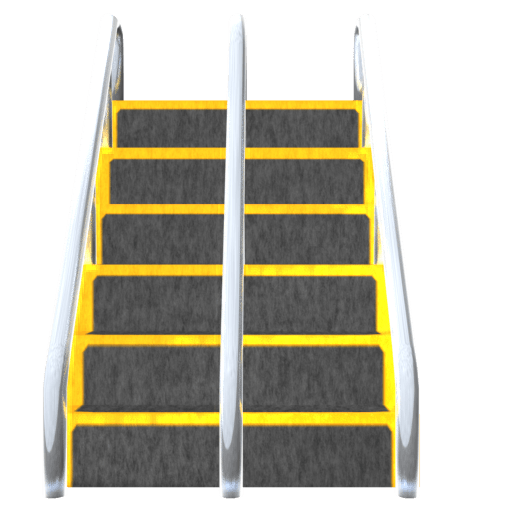
I also have a very mild phobia of stepping down staircases (especially ones with steep treads) because I fear that I might fall. Unlike other individuals, I cannot balance as well on precarious surfaces or certain angles, so I need to use the railings on the stairs when climbing down.
This phobia is known as “bathmophobia” and is a fear of falling down a flight of steps or a steep incline. (Cleveland Clinic, 2022)
Despite this fear of stairs, I would rather take the stairs than the elevator, as elevators make me disorientated and nauseous. In rare cases, elevators have been known to malfunction or even fall. Taking the stairs is healthier and helps build up leg muscles as well as provide a visual path of where I am going. 👀
How I manage my asthmatic attacks
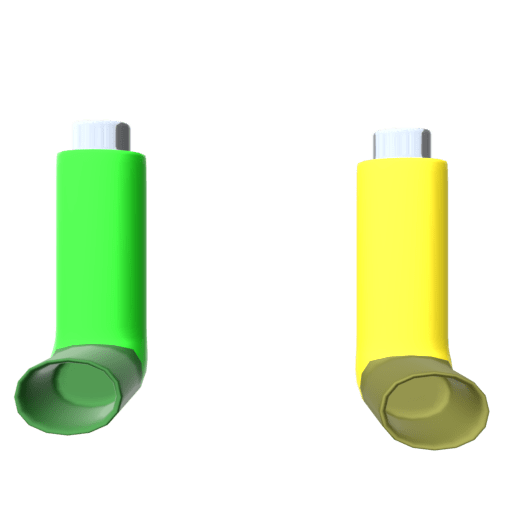
Should an attack happen, I use a specific type of inhaler known as a ‘reliever‘. This helps to open my airways within minutes of an attack commencing. To reduce the likelihood of myself experiencing attacks, I use a different type of inhaler known as a ‘preventer‘. These two types of inhalers are explained in more detail below.
From my experience, a reliever works by dilating my airways, reversing an ongoing asthma attack. This is in contrast to a preventer, which makes my airways less sensitive over time. This works through corticosteroids. (Wikipedia contributors, 2024).
My carer and I have both found that by taking my preventer at 8am and 8pm every day in a fixed routine has helped greatly with reducing the likelihood of attacks, and has really improved my quality of life during the winter months. The reliever and preventer are both visualised below with this image, just in different colours from the usual blue and brown:
In my experience with this condition, I try to self-manage attacks through my own checklist. This self-approved checklist that I follow includes:
- Staying away from smoke.
- I usually prefer refrigerated airconditioning as opposed to evaporative airconditioning. This is because evaporative (water-based) airconditioning leads to increased humidity and often is less effective, thereby increase the risk of mould and dust mites inside the house. I am careful with how cold my room gets. (Better Health Channel, 2022).
- Staying away from mould.
- Avoiding any exercise when pollen levels are high.
- Closing windows and doors on days that are breezy and cold or smoggy.
- I never leave my house without my inhaler or preventer when on outings. This is just in case of an attack.
- As advised by my doctor, I take my preventer every morning and evening at 8am and 8pm.
A living, breathing video clip of the lungs
The video clip shown below was created in the 3D modelling software Blender (version 4.0.2), and is a simplified example of how the lungs work inside the human body:
Princess Lilli Lilac

Although Lilli may not have much to do with my asthma as she doesn’t trigger it, she does help to keep me calm and relaxed at times. We have been inseparable from the day we first met, and will always love each other. 💜
Conclusion
I hope that you have learned lots about asthma, and how it affects my day-to-day life. See you on the next blog post! 🗞
References
Asthma Australia. (n.d). Asthma flare-ups & attacks. Asthma.org.au. https://asthma.org.au/about-asthma/asthma-attacks/
Wikipedia contributors. (2024, July 28). Anti-asthmatic agents. In Wikipedia, The Free Encyclopedia. Retrieved 06:40, August 27, 2024, from https://en.wikipedia.org/w/index.php?title=Anti-asthmatic_agents&oldid=1237079009
Robinson, J. (2023, May 11). Asthma & coronavirus. WebMD. https://www.webmd.com/asthma/covid-19-asthma
Australian Institute of Health and Welfare. (2024). Chronic respiratory conditions. Retrieved from https://www.aihw.gov.au/reports/chronic-respiratory-conditions/chronic-respiratory-conditions
Cleveland Clinic. (2022, March 22). Bathmophobia (Fear of Stairs). https://my.clevelandclinic.org/health/diseases/22576-bathmophobia-fear-of-stairs
Victor, E., Anne, E. D., Benjamin, A. R., & Paul, D. (2024, July 8). Genetics of asthma. UpToDate. https://www.uptodate.com/contents/genetics-of-asthma
Soliman, M., Holland, K., & Goldman, L. (2024, January 2). Everything you need to know about asthma: symptoms, types, causes, prevention and more. https://www.healthline.com/health/asthma
Wikipedia contributors. (2024, August 30). Salbutamol. In Wikipedia, The Free Encyclopedia. Retrieved 23:59, September 12, 2024, from https://en.wikipedia.org/w/index.php?title=Salbutamol&oldid=1243165073
Wikipedia contributors. (2024, March 27). Beclometasone. In Wikipedia, The Free Encyclopedia. Retrieved 00:04, September 13, 2024, from https://en.wikipedia.org/w/index.php?title=Beclometasone&oldid=1215843470
Better Health Channel. (2022, November 17). Asthma-friendly home. https://www.betterhealth.vic.gov.au/health/conditionsandtreatments/asthma-friendly-home